




This post is for academic purposes only. Please read the original document if you intend to use them for clinical purposes.
This document summarizes the key information regarding Nipah Virus Disease (NiVD) as outlined in the Communicable Disease (CD) alert published in February 2026 by National Centre for Disease Control (NCDC) of Director General of Health Services (DGHS), Government of India. It is a highly lethal, emerging zoonotic infectious disease caused by the Nipah virus (NiV), a member of the Henipavirus genus. First identified in 1998, the virus carries a global Case Fatality Rate (CFR) estimated between 40% and 75%. In India, the impact has been even more severe, with a cumulative CFR of 69.5% across 13 recorded outbreaks as of January 2026. With no approved vaccine or specific treatment currently available, management relies on rigorous surveillance, contact tracing, and intensive supportive care.
Advertisement:
Background:
Nipah virus belongs to the family Paramyxoviridae. It is a pleomorphic virus (varying in shape from spherical to filamentous) containing a non-segmented, negative-sense, single-stranded RNA genome.
Classification:
Phylogenetic analysis of the G and N genes classifies NiV into two distinct clades:
- NiV-Malaysia (NiV-MY): Includes isolates from Malaysia and Cambodia.
- NiV-Bangladesh (NiV-BD): Includes isolates from Bangladesh and India.
Timeline:
- 1998-1999: First recognized in a large outbreak (276 cases) in Malaysia and Singapore, initially affecting the swine industry and abattoir workers.
- 2001: First Indian outbreak reported in Siliguri, West Bengal (WB), India.
- 2018-2025: Recurring localized outbreaks in Kerala, India, with fruit bats confirmed as the primary source.
- 2026 (as of Jan): outbreak reported in North 24 Parganas, WB, India
Epidemiology:
Global:
Since 1999, NiV has caused 754 cases and over 435 deaths globally. The majority of cases are concentrated in Southeast Asia:
- Bangladesh: 46% of global cases (often seasonal, linked to date palm sap harvesting).
- Malaysia: 36.5%
- India: 13.5%
- Philippines: 2.5%
- Singapore: 1.5%
India (2001–2026):
India has experienced 13 recorded outbreaks, primarily in WB and Kerala.
| Year | Outbreaks | Lab Confirmed Cases | Deaths | CFR (%) | Location/Remarks |
| 2001 | 1 | 66 | 45 | 68% | Siliguri, WB; person-to-person transmission |
| 2007 | 1 | 5 | 5 | 100% | Nadia District, WB |
| 2018 | 1 | 18 | 16 | 88.9% | Kerala (Kozhikode and Malappuram) |
| 2019 | 1 | 1 | 0 | 0% | Kerala (Ernakulum) |
| 2021 | 1 | 1 | 1 | 100% | Kerala (Kozhikode) |
| 2023 | 1 | 6 | 2 | 33.33% | Kerala (Kozhikode) |
| 2024 | 2 | 2 | 2 | 100% | Kerala (Pandikand and Thiruvali) |
| 2025 | 4 | 4 | 2 | 50% | Kerala (Palakkad and Malappuram) |
| 2026 | 1 | 2 | 0 | 0% | North 24 Parganas, WB (as of Jan 2026) |
| Total | 13 | 105 | 73 | 69.5% |
Transmission:
Reservoirs and Hosts:
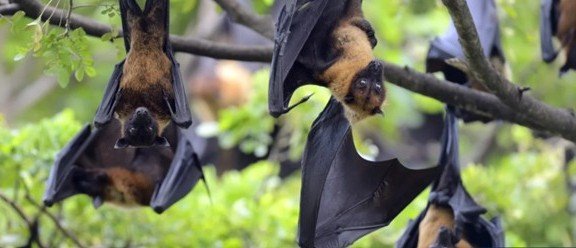
- Natural Host: Fruit bats of the genus Pteropus (flying foxes). The virus is asymptomatic in these bats.
- Intermediate Hosts: Pigs (Malaysia) and horses (Philippines). Domestic animals like dogs, cats, goats, and cattle can also show serologic evidence of infection.
- Human Hosts: Infection is rare but typically occurs as a “spillover event.”
Modes of Transmission:
- Bat-to-Human: Exposure to bat bodily fluids (blood, saliva, or excrement). Common routes include consuming raw date palm sap contaminated by bats or eating fruit partially eaten by bats.
- Animal-to-Human: Direct exposure to infected tissues or fluids of intermediate hosts (e.g., slaughtering infected pigs or eating infected horse meat).
- Human-to-Human: Contact with contaminated body fluids (saliva, urine, vomitus) or tissues, often occurring in household or healthcare (nosocomial) settings.
Environmental Stability:
The virus can survive 3–7 days in fruit juices or simulated date palm sap at 22°C. However, it is highly sensitive to:
- Heat (inactivated at 100°C for >15 minutes).
- Soaps and detergents.
- Disinfectants like formalin and sodium hypochlorite.
Clinical Features:
Humans:
The incubation period typically ranges from 6 to 21 days (with 90% of cases appearing within 14 days).
- Acute Phase: Fever, headache, vomiting, sore throat, and myalgia.
- Severe Progression: Rapid progression to acute encephalitis (dizziness, altered sensorium, seizures). Coma can occur within 24–48 hours.
- Respiratory Symptoms: Atypical pneumonia and acute respiratory distress.
- Neurological Sequelae: 20%–30% of survivors suffer persistent deficits, including clinical depression, cognitive difficulties, and nerve palsies.
- Relapses: Late-onset encephalitis can occur months or even up to four years after the initial infection.
Animals:
- Pigs: Highly contagious. Symptoms include acute fever, labored breathing, and neurological signs (trembling, muscle spasms). Mortality is high in young piglets but lower in older pigs.
- Horses: Severe respiratory disease with fever and tachycardia; fatality rate exceeds 75%.
Diagnosis:
Case Definitions:
- Suspect Case: Fever with new-onset altered mental status, seizure, headache, cough, or direct contact with a confirmed case in an outbreak area.
- Probable Case: A suspect case with travel/residency history in an outbreak area or contact with a confirmed patient who died before diagnosis.
- Confirmed Case: A presumptive case with NiV RNA identified by PCR or viral isolation from respiratory secretions, urine, or CSF.
Lab Diagnosis:
- Molecular (RT-PCR): Used during the acute phase to detect NiV-specific RNA.
- Serological (ELISA): Used in the later phase (10–14 days post-symptom onset) to detect antibodies.
- Specimen Handling: Samples (swabs, blood, urine, CSF) must be handled with BSL-4 containment precautions when high viral loads are suspected (e.g., postmortem tissues).
Management:
There is currently no known treatment or vaccine for NiVD in humans or animals.
- Supportive Care: The mainstay of treatment is intensive care, rest, and hydration.
- Antivirals: Ribavirin has been used, but its efficacy in reducing encephalitis-related mortality remains unclear.
- Experimental Therapies: Monoclonal antibody m102.4 has completed Phase 1 trials and is used on a compassionate basis.
- Vaccine Development: The world’s first Phase II trial for a Nipah vaccine (ChAdOx1 NipahB) was launched in Bangladesh in 2025.
Preventive Measures:
Public Health Strategies:
- Infection Prevention and Control (IPC): Use of standard, contact and droplet precautions in healthcare settings. Please note that airborne precautions are required during aerosol generating produres (AGP).
- Contact Tracing: Meticulous tracing and 21-day quarantine for close contacts.
- Information, Education, and Communication (IEC): Disseminating messages to avoid raw date palm sap, wash fruits thoroughly, avoid half-eaten fruits, and stay away from abandoned wells or bat-inhabited caves.
Veterinary and Environmental Control:
- Establishing biosecurity on pig farms to prevent contact with fruit bats.
- Culling and safe disposal (incineration or burial) of infected livestock.
- Restricting movement of animals from infected areas.
Biosecurity:
The CDC identifies Nipah virus as a Category C bioterrorism agent. Reasons for its potential use as a biological weapon include:
- High Mortality: Case fatality rates up to 75%.
- Economic Impact: Potential to devastate the swine industry, leading to mass culling and national economic loss.
- Dissemination: Ease of production and potential for engineering for mass dissemination.
- Social Disruption: Lack of treatment and limited public knowledge can cause substantial fear and social instability.
Conclusion:
The document provides a comprehensive overview of the Nipah Virus Disease (NiVD) situation based on the provided NCDC alert. Continued vigilance and adherence to public health guidelines are essential to mitigate the impact of this ongoing public health threat.
Credit for image:WHO