





Disclaimer: This post is for academic purposes only. Please read the original document if you intend to use them for clinical purposes.
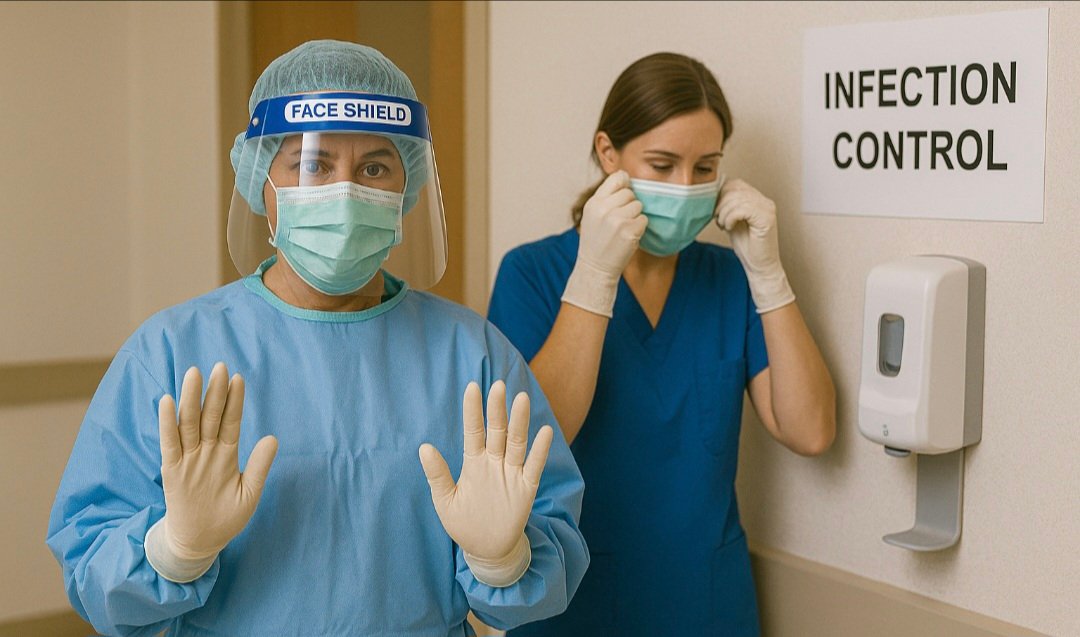
Excerpts from this Society for Healthcare Epidemiology of America (SHEA)/Association for Professionals in Infection Control and Epidemiology (APIC)/Infectious Diseases Society of America (IDSA)/Pediatric Infectious Diseases Society (PIDS) multisociety position paper advocates for strengthening healthcare facility Infection Prevention and Control (IPC) programs by defining necessary resources, structure, leadership, expertise, and collaborative partnerships to move from “active” to “effective” programs. It applies to all types of healthcare settings except post-acute long-term care.
Advertisement:

Themes:
- Effective IPC programs:
- Healthcare Associated Infections (HAI)s are common, causing significant morbidity, mortality, and substantial impact on healthcare costs, length of stay, and operational efficiency.
- Beyond publicly reported HAIs (like CLABSIs), other infectious risks exist, including contagious disease outbreaks, device/instrument reprocessing failures, environmental control lapses, and contaminated supplies. These risks can harm patients, healthcare workers (HCW), and visitors and threaten facility operations. Many infectious harms are preventable through evidence-based practices (hand hygiene, environmental cleaning, standardized procedures).
- Effective IPC programs are not cost centers but are foundational to successful facility operations, reducing infectious harms, improving financial and reputational metrics, and impacting community health. HAIs lead to significant costs, with estimated savings from optimized IPC programs
- Effective IPC programs improve patient outcomes and positively impact quality ratings from external sources, which can affect reputation. IPC programs connect with public health departments, playing a primary role in early outbreak identification and control.
2. Raise the bar:
- Existing regulatory requirements mandate an “active” IPC program with qualified leaders and systems for prevention, control, and monitoring. However, the subjective nature of “active” leads to disparities in resources and prioritization.
- SHEA, APIC, IDSA, and PIDS advocate for strengthening requirements to ensure programs are effective, defined as being:
- Foundational and influential parts of the facility’s operational structure
- Resourced with the correct expertise and leadership
- Prioritized to address all potential infectious harms
3. Core roles:
- Successful IPC programs require a multidisciplinary approach with specific expertise. The document highlights two core roles:
- Infection Preventionists (IPs): Trained professionals with diverse backgrounds (nursing, public health, etc.) who lead, educate, and collaborate to reduce infections. They are responsible for surveillance, auditing, program facilitation, and risk assessment.
- IPC Physicians: Specialists with added training in IPC.Their clinical insights and credibility with medical staff are crucial.
4. Staffing:
- Current assessments and recommendations for staffing are limited, often focusing only on IPs. The APIC Mega Survey had noted a median IP staffing rate of 1.25 IPs per 100 in-patient census beds in 2018, but emphasizes that bed size alone is insufficient.
- Effective staffing requires considering:
- Facility bed size
- Scope and complexity of the healthcare system (including ambulatory care)
- Characteristics of the patient population
- Unique facility and community needs
- Larger, more complex facilities may need additional physicians with IPC expertise to focus on specific areas or provide support during surges.
- An effective program is staffed appropriately at baseline, including staffing for unexpected issues and emergencies, rather than depending on extraordinary measures simply because they are understaffed and under resourced.
5. Expertise:
- IPC personnel require core competencies and ongoing training.
- IPs: APIC competency model includes these domains: leadership, professional stewardship, quality improvement, IPC operations andIPC informatics. IP training often occurs on the job, but academic programs are developing. Certification is valuable.
- IPC Physicians: SHEA outlines core competencies in areas like epidemiology, clinical management of infectious diseases, quality improvement, healthcare administration, outcomes assessment, regulatory/public health liaison and clinician education
6. Partnerships:
- An effective IPC program requires collaboration with personnel outside the direct IPC team whose roles impact infection prevention.
- Facility leaders should align performance goals for these partners with IPC goals and ensure they have adequate resources.
- Examples of key partners include:
- Microbiology and other labs: Crucial for prompt organism detection, outbreak management (rapid identification, molecular sequencing), and diagnostic stewardship.
- Environmental services (EVS): Their cleaning and disinfection practices directly impact pathogen transmission risk. Prioritizing rapid turnover over thorough cleaning negatively impacts IPC.
- Pharmacy/Antimicrobial Stewardship: Critical for optimizing antibiotic use and reducing resistance.
- Occupational Health: Manage HCW health, including immunization programs, which impact infection spread.
- Engineering: Involved in environmental controls (ventilation, water management), crucial for infection prevention.
- Supply chain: Work with IPC to identify products reducing infectious risks and respond to recalls.
- Sterile processing and device reprocessing: Failures here are a growing concern, leading to direct patient harm and regulatory penalties. Issues related to improper instrument sterilization and device reprocessing were a leading source of facility citations by Joint Commission International (JCI).
- Implementation experts: Specialists with quality improvement training who help effectively implement policies.
7. Optimizing limited resources:
- The paper acknowledges resource limitations and discusses strategies, while emphasizing that optimal programs are appropriately staffed at baseline.
- Strategies include:
- Utilizing shared staffing models or liaison roles from clinical units.
- Using light duty staff, students, or part-time auditors.
- Developing champion extenders (non-IPs embedded in units).
- Identifying former IPs as a potential temporary expert reserve.
- Leveraging multi-disciplinary and inter-professional teams.
- Partnering with local/state public health.
- Developing core IPC strike teams in larger systems for rapid deployment.
- Utilizing external resources like tele-networks or accredited private organizations.
- Developing tiered approaches for emergencies and training redeployed staff.
- Regulatory agencies could assist by requiring preparedness plans that address optimizing scarce IPC resources.
Conclusion:
The SHEA/APIC/IDSA/PIDS position paper serves as a critical “call to action” to elevate the importance, structure, and resources of healthcare facility IPC programs. It argues strongly that IPC programs must be seen as foundational to safe and effective healthcare, not ancillary cost centers. The paper advocates appropriate expertise, dedicated time, and institutional support. It highlights the need for adequate staffing based on facility complexity, not just size, and emphasizes the crucial role of collaboration with numerous internal and external partners. Ultimately, achieving “effective” IPC programs, as opposed to merely “active” ones, is essential for reducing preventable infectious harms, protecting patients and staff, and ensuring the financial and reputational security of healthcare facilities.
Citation: Talbot TR, Baliga C, Crapanzano-Sigafoos R, et al. SHEA/APIC/IDSA/PIDS multisociety position paper: Raising the bar: necessary resources and structure for effective healthcare facility infection prevention and control programs. Infect Control Hosp Epidemiol 2025. doi: 10.1017/ice.2025.73